

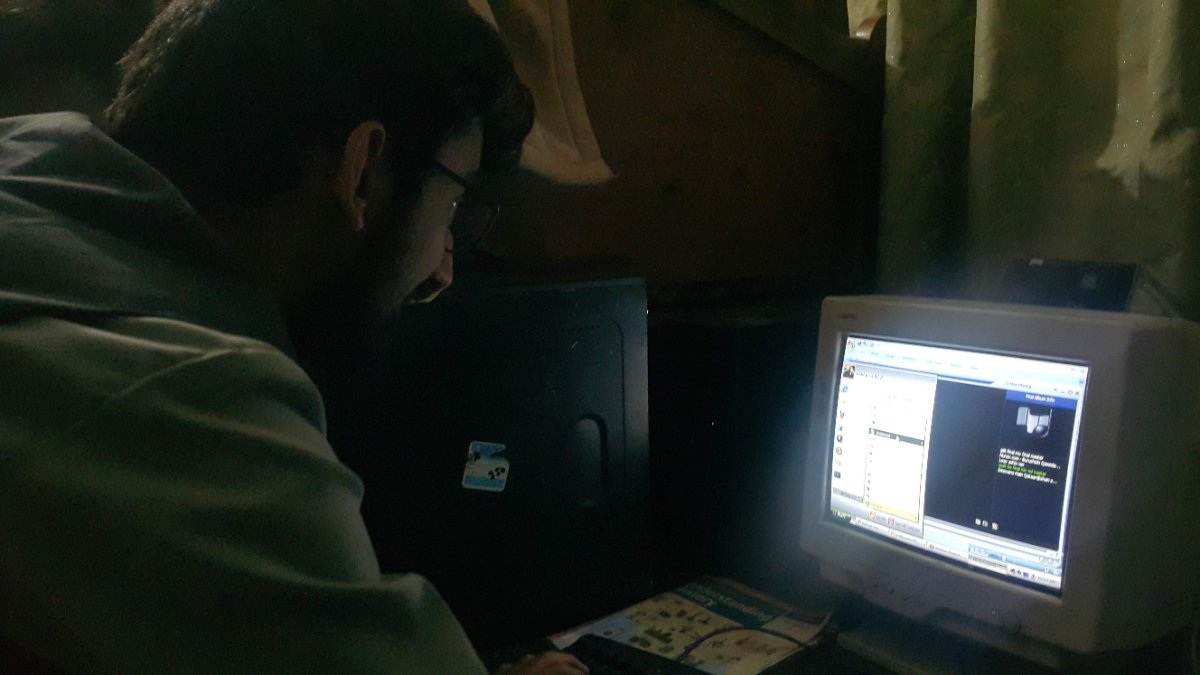
Before WhatsApp and social media, misinformation traveled a different way: by email, in giant all-caps messages full of exclamation points, always ending with the same instruction — “forward this to as many people as possible.” Anyone in their 30s or 40s today likely grew up receiving (and forwarding) these messages, along with an entire generation of PowerPoint presentations packed with sound effects and low-resolution clip art. We’re looking back at some of the most memorable hoaxes from that era — all false, and catalogued for decades by fact-checking sites.
The legend of the burger that “wasn’t meat”
One of the most persistent legends about McDonald’s claimed its burgers weren’t made of real beef at all, but of “things” — artificially created organisms with no real connection to any animal as we know it. The story spread endlessly through chain emails and later PowerPoint decks, always without any verifiable source, and is catalogued as a hoax by the Brazilian site Quatro Cantos, which has documented internet urban legends since 1999.
An earlier version of the same basic suspicion, according to McDonald’s own Brazil vice president, Roberto Gnypek, dates back to the 1980s: journalists visiting one of the chain’s plants compared the shape of ground meat coming out of the grinder to an earthworm, and the comment turned into a rumor that the burgers were made of worm meat. Decades later, new versions of the same underlying fear — “this meat isn’t what it seems” — keep resurfacing, including recent and equally false claims that the FBI found human remains at one of the chain’s suppliers, debunked by fact-checking sites such as Boatos.org.
KFC’s cousin legend: the chicken with no beak, feathers or bones
Running alongside the McDonald’s legend, an almost identical story circulated about KFC: the chain supposedly didn’t use real chickens, but genetically engineered “mutant organisms” — no beak, no feathers, no legs — grown in labs and fed through tubes, designed purely to produce the maximum amount of meat with minimum waste. Some versions of the email even claimed the U.S. government had forced the company to shorten “Kentucky Fried Chicken” to “KFC” because it could no longer legally use the word “chicken.” None of it is true — it’s an urban legend catalogued for more than two decades, with no evidence or source behind it, according to the same Quatro Cantos site.
Bill Gates wants to pay you to forward an email
Another classic of the genre claimed Microsoft was testing an email-tracking program and would pay a cash reward — usually $245 or $1,000 — to everyone who forwarded the message, supposedly signed by Bill Gates himself. The offer never existed. Microsoft never ran any such program, and the “money chain letter” is regarded as one of the most-forwarded hoaxes in internet history.
Procter & Gamble’s “satanic” logo
Back in the 1980s, even before the internet went mainstream, a rumor claimed the president of Procter & Gamble had confirmed on American television that the company and its logo — a man in the moon looking out at 13 stars — were linked to the Church of Satan. No such TV appearance ever happened, and the company never had any ties to the Church of Satan, which itself called the claim “completely false.” Even so, the rumor first spread by fax and photocopier, then found new life by email in the 1990s and 2000s — to the point that Procter & Gamble sued competing distributors who kept spreading the story.
Why these hoaxes spread so easily
All four cases share the same structure: a shocking claim, easy to believe because it taps into basic fears (strange food, easy money, religious conspiracy), no verifiable source, and always ending with a request to pass it on. That pattern was so repetitive it ironically spawned its own famous counter-hoax at the time — an email titled “It’s True… It’s True!!” that circulated debunking several of these stories at once, including the Bill Gates and Procter & Gamble legends.
The era of chain emails and PowerPoints with background music is long gone, but the basic shape of misinformation hasn’t changed much — today it travels through WhatsApp and social media, following the same old formula: a shocking claim, zero sourcing, and a push to share before checking.


























Leave a Reply
You must be logged in to post a comment.