
 TilTRax: Pinball Rock

From Davos and Klaus Schwab’s book to crisis simulations and blackout rumors: a detailed guide to the documents, the criticism and the evidence.
OnTheNet special report | Research closed on November 14, 2026.
The Great Reset is a real public initiative and the title of a real book. Claims that a secret elite is deliberately causing crises, confiscating property and controlling society require a separate examination. Treating the documented proposal and those accusations as interchangeable can turn unrelated events into an apparently unified story.
A new claim adds a deadline: a supposed worldwide blackout on November 17, 2026, sometimes said to last 90 days. At the time of writing, this investigation found no verifiable documentary evidence of a scheduled global shutdown on that date or an operational connection to the Great Reset. A real U.S. alert-system test and genuine emergency-preparedness advice help explain how the story took shape.
What was actually announced?
On June 3, 2020, during the Covid-19 pandemic, the World Economic Forum introduced the Great Reset at a virtual meeting featuring Klaus Schwab and the then Prince of Wales, Charles. Its public announcement advocated a more sustainable, inclusive recovery and presented the idea as the theme for a summit planned for 2021. The original announcement remains available from the WEF announcement.
Schwab’s accompanying article outlined three priorities: fairer market outcomes; investment aligned with shared goals such as equality and sustainability; and technology serving the public interest. The framework promoted stakeholder capitalism, under which businesses would consider workers, communities and the environment alongside shareholders. Source
The WEF describes itself as an independent, nonprofit organization based in the Geneva area that convenes leaders from business, government and other sectors. Its influence deserves scrutiny. That role does not make it a world government with automatic authority over national legislation or electrical networks. Source
Which book? The title is used by different authors
COVID-19: The Great Reset, by Klaus Schwab and Thierry Malleret, was published by Forum Publishing in 2020. The WEF announced its release on July 14 that year. The authors offered an account of the pandemic’s implications and argued for changes in economic and social policy. Source
The official description organizes the book into three levels: broad economic, societal, geopolitical, environmental and technological developments; effects on industries and companies; and possible consequences for individuals. It is an argument about how to respond to a crisis. Its publication does not demonstrate that its authors caused the pandemic or scheduled a blackout. Source
| Book | Authors | Position |
|---|---|---|
| COVID-19: The Great Reset (2020) | Klaus Schwab and Thierry Malleret | Analysis and advocacy of post-pandemic change. |
| The Great Reset: And the War for the World (2022) | Alex Jones | A conspiratorial interpretation presented as an exposé. |
| The Great Reset: Joe Biden and the Rise of Twenty-First-Century Fascism | Glenn Beck, with Justin Trask Haskins | A political critique focused on the United States. |
Skyhorse lists August 30, 2022 as the publication date of Jones’s book and markets it around allegations of an elite conspiracy. A publisher’s description establishes what a book claims, rather than independently proving the claim. The Simon & Schuster catalog presents Beck’s book as a political warning against the initiative. Source · Source
When a post displays a cover, a supposed extract or a quotation from “the Great Reset book,” check the complete title, author, edition and context. These works argue from different positions. Statements from one cannot simply be assigned to another.
How did the proposal become a conspiracy narrative?
In conspiratorial accounts, public-health crises, climate policies, digital finance and restrictions on property become stages of a single covert operation. The Institute for Strategic Dialogue describes the Great Reset narrative as a framework that can absorb existing suspicions about powerful institutions. That flexibility helps explain why very different issues are grouped under the same label. Source
The origins of “you’ll own nothing and be happy”
The phrase circulated through a WEF video about predictions for 2030 and an essay written by Ida Auken in 2016. The essay imagined urban life built around shared services. Auken clarified that it was a scenario intended to encourage discussion of technology’s advantages and disadvantages, rather than her personal utopia. The material predates the 2020 initiative. PolitiFact found no evidence of a WEF plan to seize everyone’s possessions. Source
A rental-based economy can still raise serious questions: who owns essential assets, how much choice customers retain, and what happens when a subscription ends. Those are matters for contracts, competition and consumer rights. A provocative prediction does not itself have the legal force of an expropriation law.
Is the UN’s 2030 Agenda the same thing?
No. The United Nations adopted the 2030 Agenda on September 25, 2015, with 17 Sustainable Development Goals. Its themes overlap with some WEF discussions, but the institutions, dates and documents differ. Target 1.4 explicitly addresses access to ownership and control over land and other property, which contradicts the claim that the text simply orders the abolition of private property. Source
Some supposed book quotations are fabricated
Full Fact examined a passage attributed to Schwab about eliminating billions of people through epidemics, war and starvation. It was not from COVID-19: The Great Reset. The fact-check traced it to a conspiratorial text published in 1992 by John Coleman. A quote card carrying an author’s name is not sufficient evidence of what that author wrote. Source
Event 201 and Cyber Polygon: what do exercises prove?
Event 201 took place in New York on October 18, 2019. The Johns Hopkins Center for Health Security organized the tabletop pandemic exercise with the WEF and the Bill & Melinda Gates Foundation. It explored response dilemmas and public-private cooperation in a hypothetical crisis. Source
In January 2020, Johns Hopkins stated that the exercise had not predicted the emerging coronavirus outbreak and that its fictional virus used different modeling inputs. An exercise can show that people considered a risk. To establish that they deliberately caused a later event would require independent evidence of action and causation. Source
Cyber Polygon is another frequent reference. A European Commission response to the European Parliament in February 2022 explained that cybersecurity exercises test procedures, raise awareness and improve preparedness. The parliamentary exchange concerned a 2021 supply-chain attack simulation. It does not provide a timetable for a November 2026 blackout. Source
November 17, 2026: what is actually scheduled?
The FCC’s public notice DA 26-989, released in September 2026, announces a nationwide U.S. Emergency Alert System (EAS) test on November 17 at 2:20 p.m. Eastern Time, with December 3 as the backup date. The notice concerns distributing an emergency test message. It is not an instruction to disconnect electricity generation or transmission. Source
A municipal notice from Ruidoso explains what audiences should expect: participating broadcasters and other providers briefly interrupt programming, for approximately one minute, before normal programming resumes. The message should identify itself as a test and say that no public action is required. Source
FEMA’s 2026 test FAQs, also reproduced through its press-release distribution service, state that Wireless Emergency Alerts to cellphones are not part of this year’s test. Claims about electricity, internet access or banking shutdowns go beyond the announced scope. Source
What about The Simpsons?
CNN Brasil traced part of the rumor to footage from the 35th season of The Simpsons, broadcast in 2023, in which Lisa recalls a Springfield blackout on a November 17. The report notes that the episode’s holiday timeline does not match 2026. A fictional scene supplies no technical evidence for a worldwide outage on the corresponding calendar date. Source


Why is Brazil recommending emergency supplies?
On November 7, 2026, Brazil’s Ministry of Integration and Regional Development said that its emergency-kit advice was preventive and was not tied to a national alert or a prediction of widespread service or supply disruption. Similar guidance had already been shared in March and April. Source
The European Union also included household self-sufficiency for at least 72 hours in its preparedness strategy presented in March 2025. This planning horizon concerns the first stage of different emergencies. It does not establish a secret date or substantiate a 90-day global blackout. Source
Emergency supplies can be useful during storms, flooding and local outages. Households should consider regional risks and follow civil-protection guidance. Local electricity distributors are the appropriate source for planned maintenance and local interruptions; broader incidents require information from the responsible system authorities.
And the Pentagon’s “zombie plan”?
CONPLAN 8888-11, dated April 30, 2011 and released by U.S. Strategic Command, uses a fictional zombie scenario to teach military planning. Its introductory explanation says an impossible scenario helped avoid diplomatic confusion involving real countries. The document’s existence does not establish a zombie threat or connect the exercise to November 17, 2026. Source
Real blackouts require technical investigation
The blackout in Spain and Portugal on April 28, 2025 provides a documented comparison. ENTSO-E’s final report, published in March 2026, identified interacting factors including oscillations, gaps in voltage and reactive-power control, and cascading generation disconnections. The rest of Europe’s power system experienced no significant disturbance. Source
A technical investigation reconstructs equipment behavior, timing and mechanisms. Merely placing different headlines side by side does not establish a causal chain. A local outage that might occur on November 17 would not, by itself, confirm a prediction of a deliberately engineered worldwide collapse.
Legitimate questions about power and democracy
Demanding transparency does not require accepting an all-encompassing plot. The WEF’s own foundation-member charter describes funding through contributions from major corporations. That structure makes representation, conflicts of interest and unequal access to decision-makers reasonable subjects for scrutiny. Source
Editorial analysis: who determines which stakeholders count? Who bears the costs of an economic transition? Which proposals receive parliamentary debate and public consultation? How can people distinguish measurable environmental and social outcomes from corporate marketing? These questions can be investigated through identifiable decisions and records.
Digital money and identity also warrant scrutiny on their documented features. Brazil’s central bank describes Drex as infrastructure for transactions involving digital assets and addresses privacy and physical cash in its FAQs. Connecting such a project to a scheduled blackout requires evidence that the consulted sources do not provide. Source
A timeline of documents from different periods
- 2011: CONPLAN 8888-11 uses fiction for military training.
- 2015: the UN adopts the 2030 Agenda.
- 2016: Auken’s imagined future and a WEF video fuel discussion of ownership.
- 2019: Event 201 models a hypothetical pandemic.
- 2020: the Great Reset initiative and Schwab and Malleret’s book are publicly launched.
- 2021: Cyber Polygon addresses cybersecurity risks.
- 2022: Jones publishes his conspiratorial interpretation.
- 2025: the EU includes 72-hour preparedness in its strategy; the Iberian blackout occurs in April.
- 2026: a November 17 EAS test becomes attached to an unsubstantiated global-blackout claim.
How to assess the next alarming message
Ask for the original document. Check its date, country, issuing institution and actual scope. Distinguish an exercise from an incident, advice from a mandate, and a hypothesis from evidence. For book quotations, request an edition and page reference. A video can cite several genuine events and still reach a conclusion that none of them supports.
What remains unsubstantiated: this investigation found no verifiable evidence that the Great Reset includes a worldwide blackout scheduled for November 17, 2026. This finding reflects the material available on November 14. It is not a guarantee against local failures or future risks. Further assessment should depend on identifiable documents and observable events.
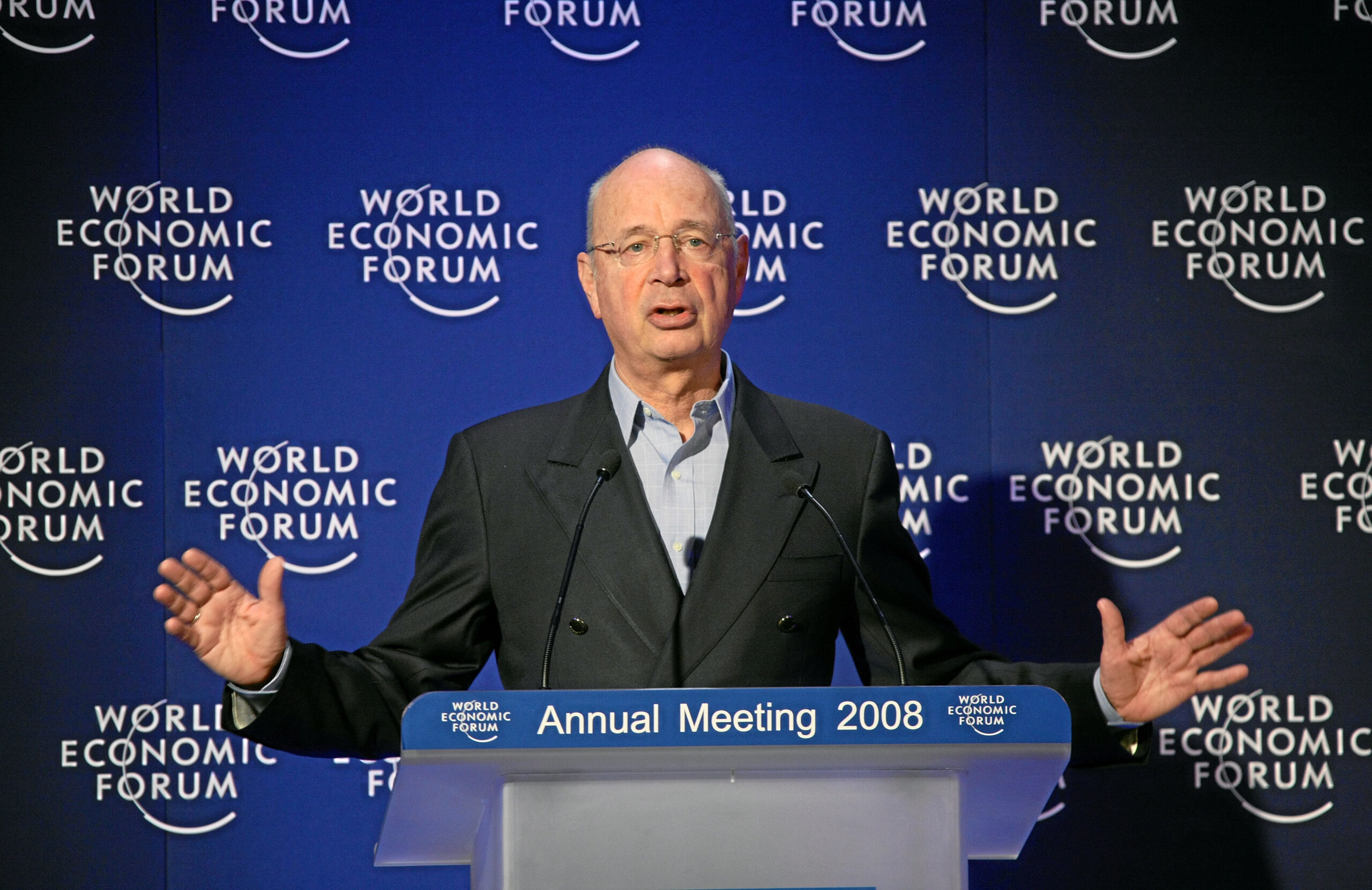
Transparency: this report uses public documents, publishers’ catalogs and the fact-checks linked in the text. No interviews were conducted for this article. All photographs are credited archive images; none depicts the alleged future event. Cover photograph: Klaus Schwab in Davos, January 27, 2008, Remy Steinegger / World Economic Forum / swiss-image.ch, via Wikimedia Commons, CC BY-SA 2.0.

Leave a Reply
You must be logged in to post a comment.