
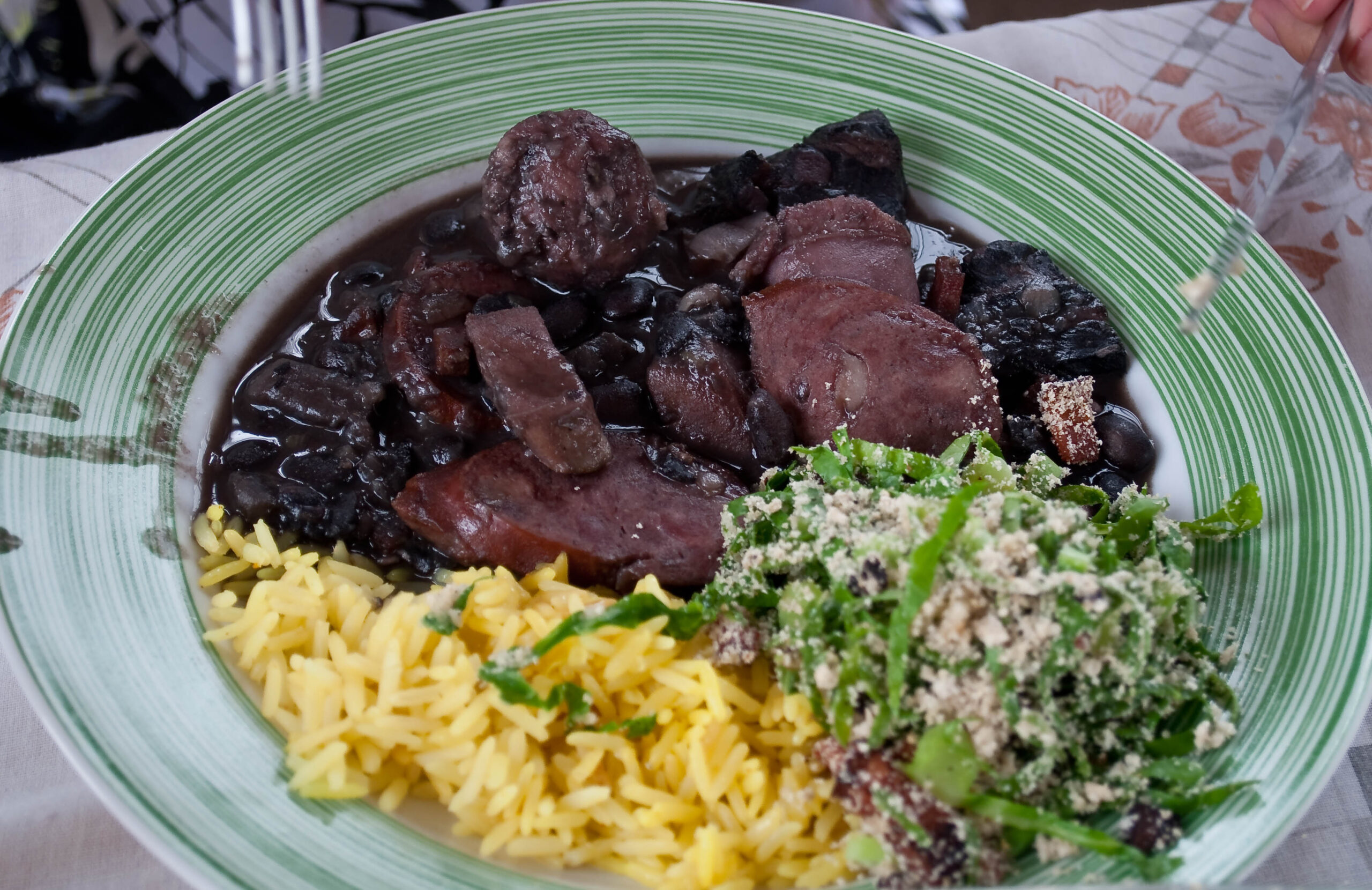



Few dishes carry as much cultural significance as feijoada. Considered Brazil’s national dish, it is a stew made with black beans and different cuts of pork and beef. It is traditionally served with white rice, sautéed collard greens, toasted cassava flour (farofa), and orange slices, which help balance the richness of such a hearty meal.
The Origin of Feijoada and Its Regional Differences
Brazilian feijoada differs from other versions found in Latin America and Portugal mainly because it uses black beans as its base. Other cuisines, by contrast, tend to use white or red beans. In Brazil, feijoada is commonly served as a weekend dish. It is especially popular on Saturdays in bars and restaurants across the country. Regional variations also exist: in Minas Gerais, for example, the recipe often includes finely chopped collard greens. In parts of the Northeast, meanwhile, the preparation gains local seasoning touches. For those who want to learn more about the dish’s history, further research is worthwhile.
Ingredients and How to Prepare a Complete Feijoada
Ingredients: 500g black beans, 300g desalted dried beef, and 200g salted pork ribs. Add 200g Brazilian smoked sausage, 150g bacon, 2 smoked sausage links, onion, garlic, bay leaves, salt, and pepper to taste.
Instructions: First, soak the beans and desalt the salted meats in the refrigerator, changing the water a few times. Next, cook the beans in a pressure cooker until tender. Meanwhile, sauté the onion and garlic in another pan, add the meats in pieces, and brown them well. Then, add the cooked beans and more water if needed. Finally, simmer over low heat for about an hour, until the flavors blend and the broth thickens.
How to Serve the Complete Dish
Serve the dish with white rice, collard greens quickly sautéed in butter, crispy farofa, and fresh orange slices. This is the full combination that gives the dish its name, “feijoada completa,” found on menus across nearly every region of the country. Finally, check out more Cuisine posts here on OnTheNet for other traditional recipes.


























Leave a Reply
You must be logged in to post a comment.