
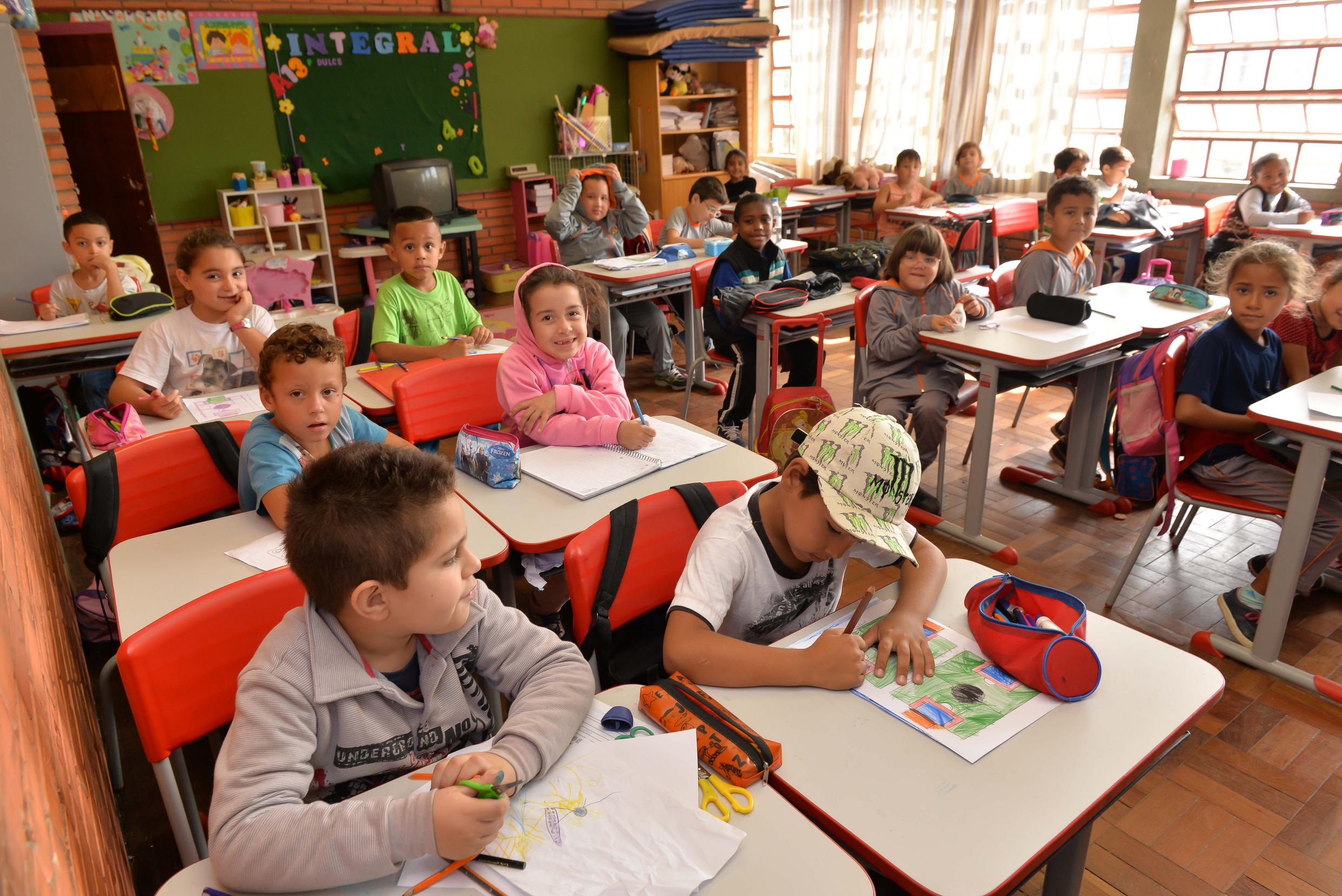



Brazil has narrowed its long-term performance gap with OECD countries in PISA, the Programme for International Student Assessment. However, its scores remain below the OECD average in reading, mathematics and science.
The 2025 assessment tests the skills of 15-year-old students. Brazil’s performance remained relatively stable between 2006 and 2025, while the OECD average fell over the same period.
Brazil’s PISA scores and the OECD comparison
In 2025, Brazil scored 408 points in reading, 377 in mathematics and 409 in science. By comparison, the OECD averages were 466, 469 and 486 points, respectively.
Since 2006, Brazil’s gap with the OECD average has narrowed by 44 points in reading. It also fell by 39 points in mathematics and 36 points in science.
Mathematics remains a major challenge
Despite this relative improvement, specialists estimate that Brazil is about 4.6 years behind OECD countries in mathematics. Only 28% of Brazilian students reached the minimum proficiency level in that subject.
The study involved 760,000 students across 91 countries. In Brazil, 30,140 students took the tests between April and May 2025. Of those students, 72.4% attended public schools and 96.9% lived in urban areas.
Social inequality shapes learning outcomes
The assessment also highlights deep social and economic inequalities. Disadvantaged students scored 96 points below their more advantaged peers in science.
Therefore, the smaller international gap does not mean that Brazil has overcome its learning challenges. The improvement reflects stability more than substantial gains, as the country remains below the OECD average in all three subjects.
Further information is available in the OECD’s PISA 2025 results.
























Leave a Reply
You must be logged in to post a comment.