
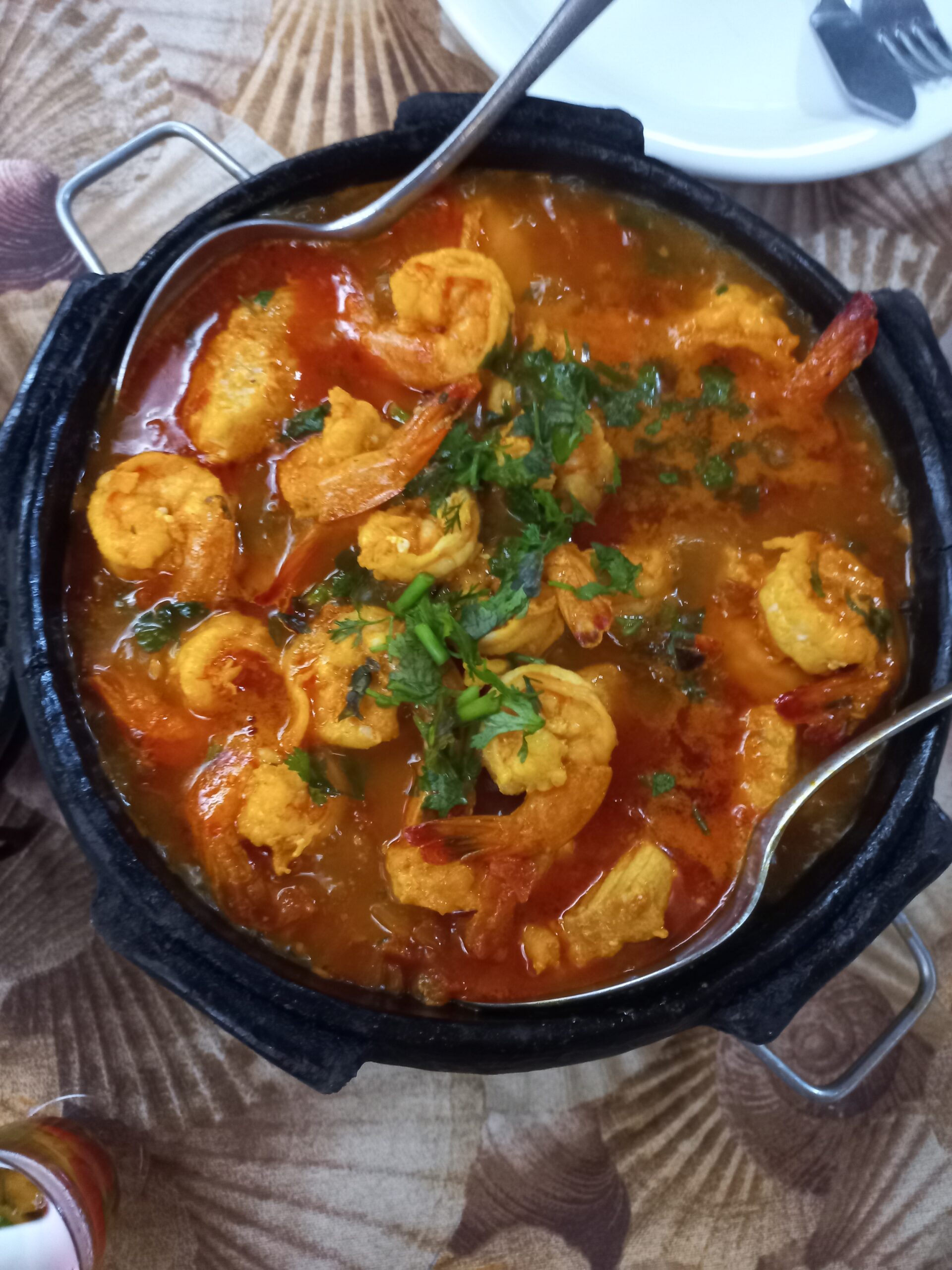



Few culinary debates divide Brazilians as much as the rivalry between moqueca capixaba and moqueca baiana. The Bahian version is better known outside the country. Moqueca capixaba, on the other hand, contains no coconut milk or palm oil. According to a popular saying in Espírito Santo, these features define the “real moqueca”: “Moqueca is only capixaba. The rest is just fish stew.”
The recipe’s roots trace back to the Indigenous peoples who lived along the coast of Espírito Santo before Portuguese colonization. These peoples already prepared fish with local ingredients and techniques. When colonizers arrived, the dish gained new seasonings but kept its simple essence. In addition, the recipe calls for fresh fish — usually snook, grouper, or similar species —, tomato, onion, garlic, cilantro, olive oil, and lime. Annatto seed gives the dish its signature reddish-yellow color.
The result is a lighter, less rich stew than the Bahian version. However, that lightness highlights the fish’s natural flavor, without the dominance of palm oil or coconut creaminess. By tradition, the paneleiras of Goiabeiras make and serve moqueca in the traditional clay pot. This community of artisans is based in Vitória, in the state of Espírito Santo. Brazil’s National Institute of Historic and Artistic Heritage (Iphan) recognized their craft as intangible cultural heritage of Brazil.
More than a recipe, moqueca capixaba is a symbol of Espírito Santo’s culinary identity. In addition, the dish appears in traditional restaurants and family tables all along the coast of Espírito Santo. Thus, it carries Indigenous heritage, Portuguese influence, and the trademark clay pots of Goiabeiras all at once.


























Leave a Reply
You must be logged in to post a comment.